PART 4
Two weeks later, the specialist finally gave us a clearer answer.
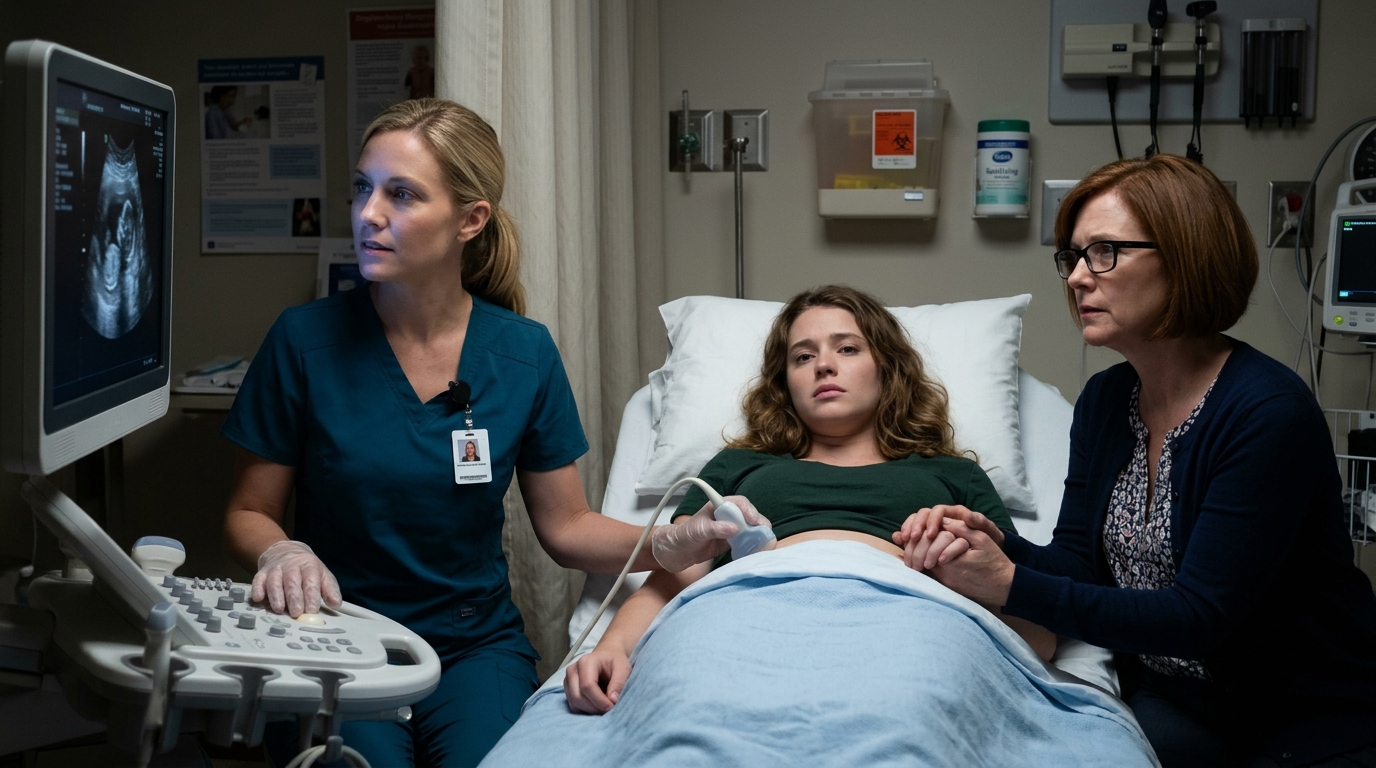
My daughter had a medical condition that required treatment and continued monitoring. It was serious enough that delaying care had been dangerous, but the doctors were hopeful that with the right treatment, she could recover well.
I cried when I heard those words—not because everything was suddenly easy, but because my daughter finally had a path forward.
She began treatment, and slowly, the pain that had controlled so much of her life started to ease.
Meanwhile, my husband continued sending messages, insisting that I had exaggerated the situation and turned our daughter against him.
Then the hospital completed its review of the earlier appointment. The records confirmed that the follow-up recommendation had been clearly documented.
My husband could no longer pretend that nobody had told him.
During a meeting arranged with professional support, he finally admitted that he had avoided the follow-up because he feared the cost and didn’t want to deal with another medical problem. He claimed he never believed our daughter was in real danger.
But when I asked why he had instructed her to keep the appointment secret, he had no convincing answer.
Our daughter listened quietly before speaking.
“You kept telling me I was doing it for attention,” she said, tears filling her eyes. “I wasn’t asking you to fix everything. I just wanted you to believe me.”
For the first time, her father lowered his head.
He apologized, but I knew an apology alone couldn’t rebuild the trust he had broken. I told him that any relationship with his daughter would have to put her well-being first, respect her boundaries, and follow the guidance of the professionals helping our family.
I also decided to separate from him while we worked through the next steps.
It wasn’t an easy decision, but I could no longer teach my daughter to speak up for herself while accepting a home where she had been afraid to tell the truth.
Months passed.
My daughter returned to school gradually. She started drawing again, reconnected with her friends, and eventually asked whether she could try dance lessons once more.
One evening, I found her practicing a few steps in the living room.
She caught me watching and smiled.
“Mom, do you think I’ll ever feel normal again?”
I walked over and hugged her.
“I think you’ll discover a new kind of normal. And you won’t have to face it alone.”
She rested her head against my shoulder.
“I’m glad you took me to the hospital.”
I held her tighter.
“I’m glad you told me the truth.”
That night, after she went to bed, I looked at an old photograph of us from when she was little. She was laughing on my shoulders, her arms wrapped around my head.
I thought about all the times she had hidden her pain to protect the adults around her.
And I made myself one promise.
In our home, nobody would ever have to suffer in silence just to keep the peace.
Because I had learned something I would carry for the rest of my life:
Sometimes, the bravest thing a parent can do isn’t to hold a family together at any cost.
It’s to listen when a child finally finds the courage to say, “Something is wrong.”
And to make sure that, from that moment on, they never have to face it alone.
